Tina Russell · 25 September 2026
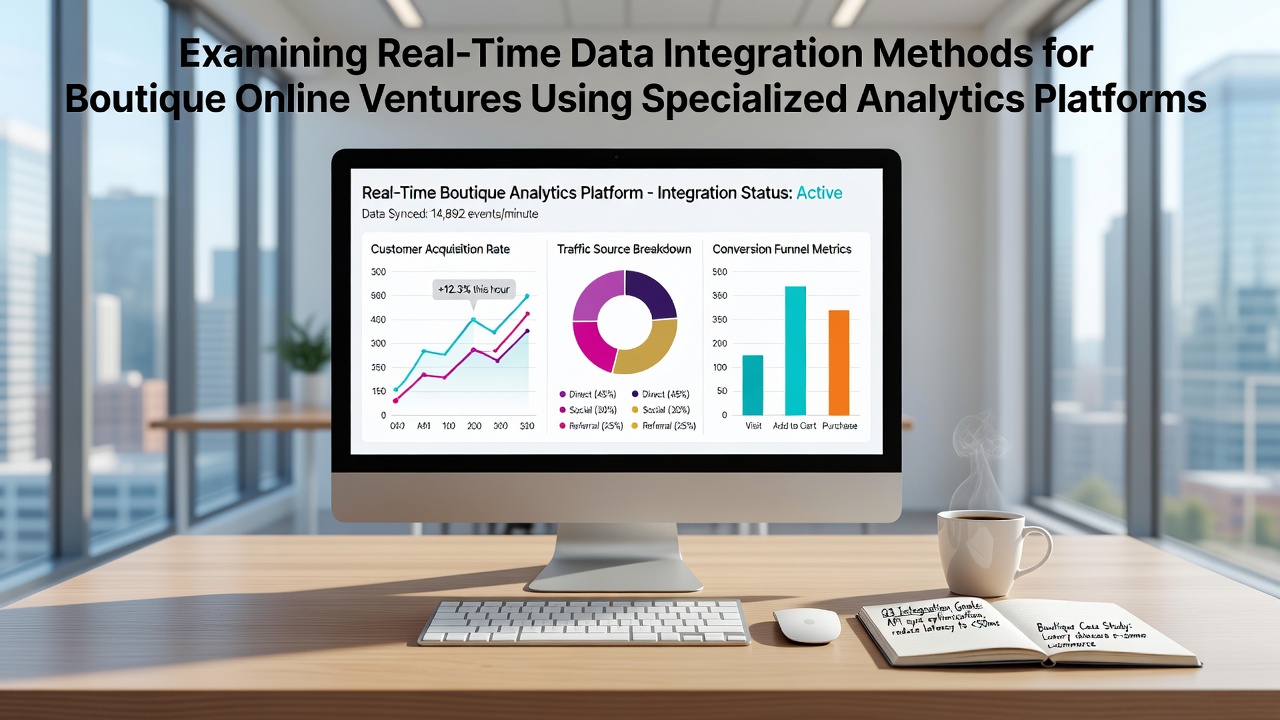
Examining Real-Time Data Integration Methods for Boutique Online Ventures Using Specialized Analytics Platforms
Boutique online ventures often handle fluctuating customer behaviors across multiple channels, and real-time data integration allows these businesses to synchronize information from websites, social platforms, and payment processors into unified views that update continuously rather than in batches.
Core Methods for Real-Time Integration
Specialized analytics platforms rely on application programming interfaces that push event data instantly when a user completes an action such as adding an item to a cart or abandoning a session, while webhooks trigger automated responses without manual intervention; researchers at academic institutions have documented how these approaches reduce latency compared with traditional extract-transform-load processes that run on scheduled intervals.
Streaming protocols like Apache Kafka or cloud-native services from providers in North America and Europe handle high volumes of incoming records by partitioning data across multiple nodes, which keeps processing speeds consistent even during peak traffic periods in September 2026 when seasonal campaigns typically drive increased activity.
Platform Capabilities and Implementation Patterns
Platforms designed for smaller operations emphasize modular connectors that link directly to common storefront tools, allowing data from inventory systems and customer relationship management software to flow into a central repository where algorithms calculate metrics like conversion rates or average order values on the fly.
One documented case involved a European retailer that adopted an event-driven architecture through a specialized service, resulting in synchronized stock levels across physical and digital channels within seconds of each transaction, according to findings published by regional trade research groups.

Configuration usually begins with defining event schemas that standardize how actions are recorded, after which authentication tokens secure the data pipelines against unauthorized access, and dashboard visualizations update automatically to reflect current conditions rather than historical snapshots.
Practical Considerations for Small-Scale Operations
Data volume remains manageable for most boutique sites, yet specialists recommend monitoring throughput limits on chosen platforms to avoid throttling during unexpected surges, and many solutions include built-in alerts that notify administrators when thresholds approach capacity.
Security protocols such as encryption in transit and role-based access controls protect sensitive customer details throughout the integration process, while compliance frameworks from various jurisdictions guide how personal information is stored and processed after it reaches the analytics layer.
Integration testing typically occurs in staged environments that mirror live conditions, allowing teams to verify that data arrives complete and correctly formatted before switching to production feeds, and ongoing validation routines compare aggregated figures against source logs to catch discrepancies early.
Emerging Trends Observed in 2026
By September 2026 platforms have incorporated machine learning models that predict inventory needs based on incoming real-time signals, which helps boutique ventures adjust marketing spend without waiting for end-of-day reports. Industry reports from organizations across Asia and the Americas indicate growing adoption of edge computing nodes that preprocess data closer to the point of collection, thereby lowering bandwidth costs and improving response times for geographically dispersed operations.
Interoperability standards continue to evolve, enabling smoother connections between analytics tools and emerging payment gateways or social commerce features, while documentation from government statistical agencies shows measurable improvements in operational efficiency for businesses that maintain continuous data flows rather than periodic uploads.
Conclusion
Real-time data integration through specialized analytics platforms equips boutique online ventures with current insights that support timely decisions across sales, marketing, and inventory management. Methods centered on APIs, streaming services, and modular connectors form the foundation of these systems, while practical implementation focuses on secure configuration and regular validation to maintain accuracy. As platforms advance through 2026 and beyond, the capacity to process live information remains a central element in how smaller digital businesses track performance and respond to market dynamics.